Songkran
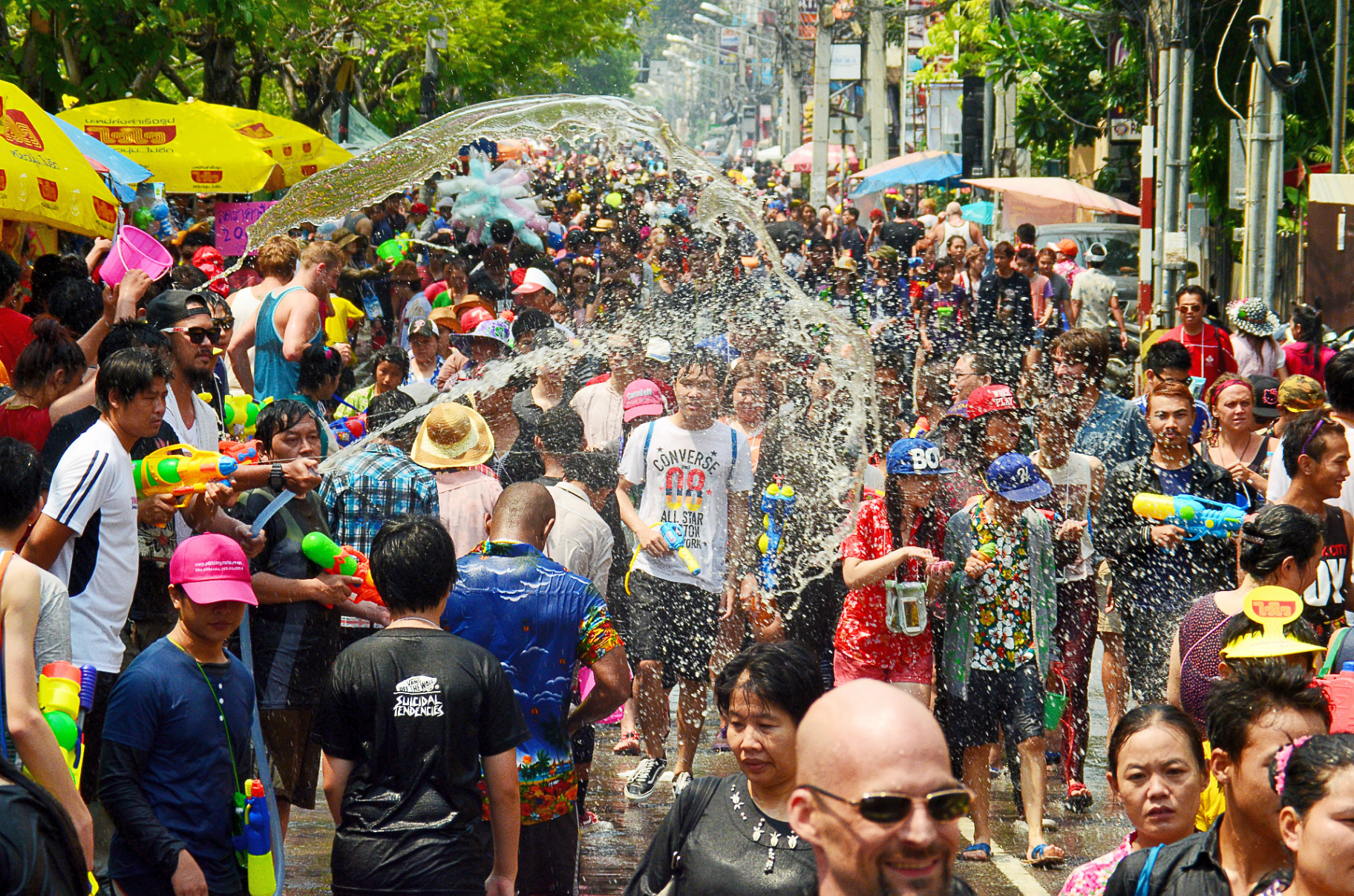
The Thai New Year is famous for a country-wide water fight symbolizing ritual cleansing and renewal.
Songkran is the Thai New Year festival, celebrated from April 13-15, and it has evolved into one of the world's most famous and exhilarating festivals. What began as a gentle ritual of sprinkling water to symbolize purification and the washing away of bad luck has transformed into an epic, nationwide water fight that brings the entire country to a joyous standstill.
The festival marks the end of the dry season and the arrival of the rainy season, traditionally a time for families to gather, pay respects to elders, visit temples, and cleanse Buddha images with scented water. These spiritual traditions remain at the heart of Songkran, especially in the mornings and in more traditional communities.
But as the day progresses, the streets transform into aquatic battlegrounds. Armed with water guns, hoses, buckets, and sometimes ice-cold water mixed with menthol or chalk paste, Thais and visitors alike engage in friendly combat. No one is spared—pedestrians, motorcyclists, passengers in open-backed tuk-tuks, even those trying to stay dry are fair targets for a good-natured soaking.
The epicenters of Songkran madness are Bangkok's Khao San Road and Silom Road, Chiang Mai's moat area, and Phuket's beaches. Music stages, foam parties, and street vendors add to the festival atmosphere. Many businesses close for the holiday, and public transportation becomes an adventure.
Despite the chaos, there's an underlying spirit of sanuk (fun) and community that makes Songkran one of the most memorable cultural experiences in Asia.